Why winter sun decides it
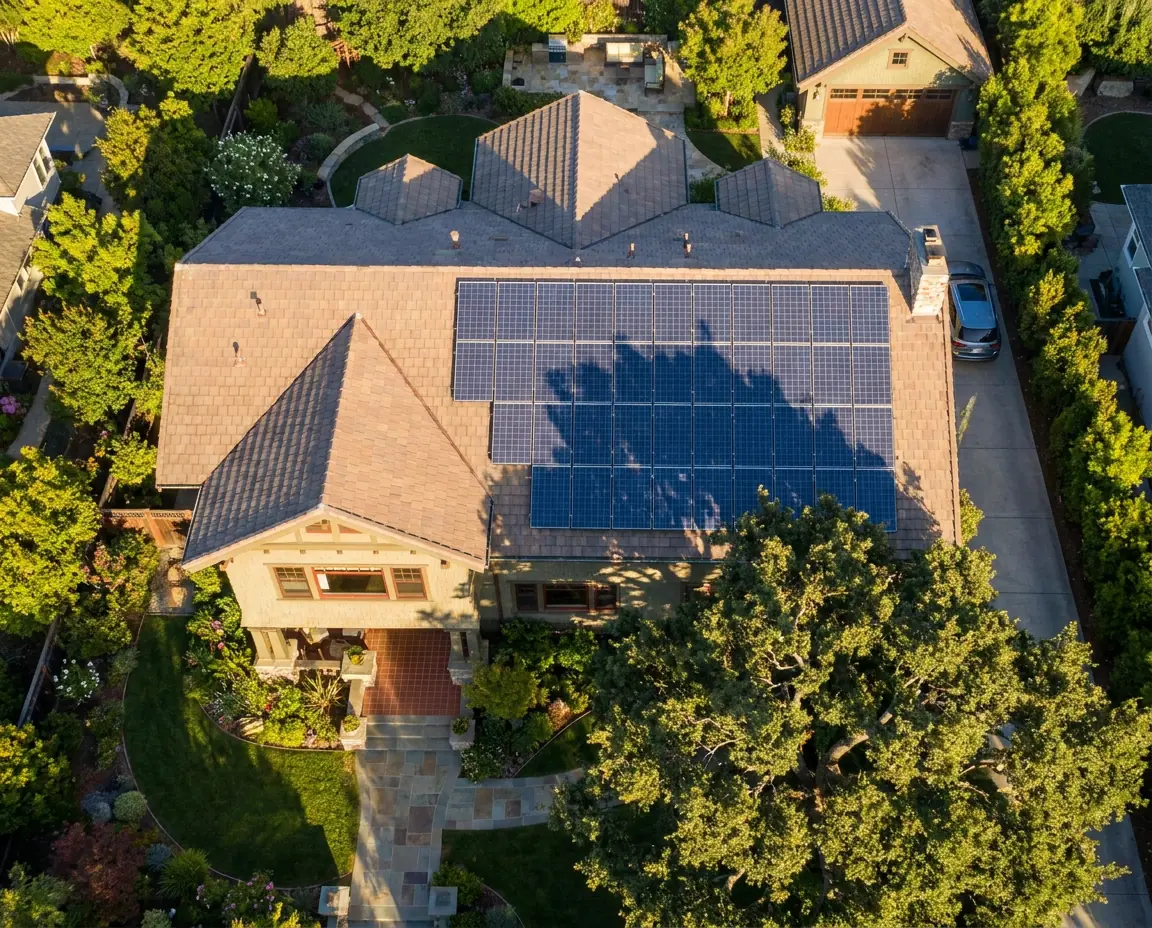
Panels earn most in summer, but the difference between a good roof and a poor one shows up in winter. The sun sits low, every shadow is long, and a tree that misses your roof in June can cover it from November to February.
So look at December, not just June. A face that keeps its midday sun in midwinter is the one to put panels on.
Which way should panels face?
In the United States, south-facing roofs get the most direct sun across the year, with west and east faces next. West suits homes that use more power in the late afternoon. North faces rarely make sense unless the pitch is very shallow.
Shade Map shows the sun on your own roof, so you can compare faces directly instead of relying on a rule of thumb.
Trees, chimneys and neighbours
Shade is not only your own trees. A neighbour's oak, a taller house next door, or your own chimney can each take hours off a face. Shade Map measures the trees around your house one by one and casts their real shadows across the roof.
What Shade Map does and doesn't tell you
It tells you how many hours of direct sun each part of the roof gets, on any day. It doesn't estimate kilowatt-hours or savings: that depends on panels, inverters and your utility. Use it to know where to ask an installer to quote.